
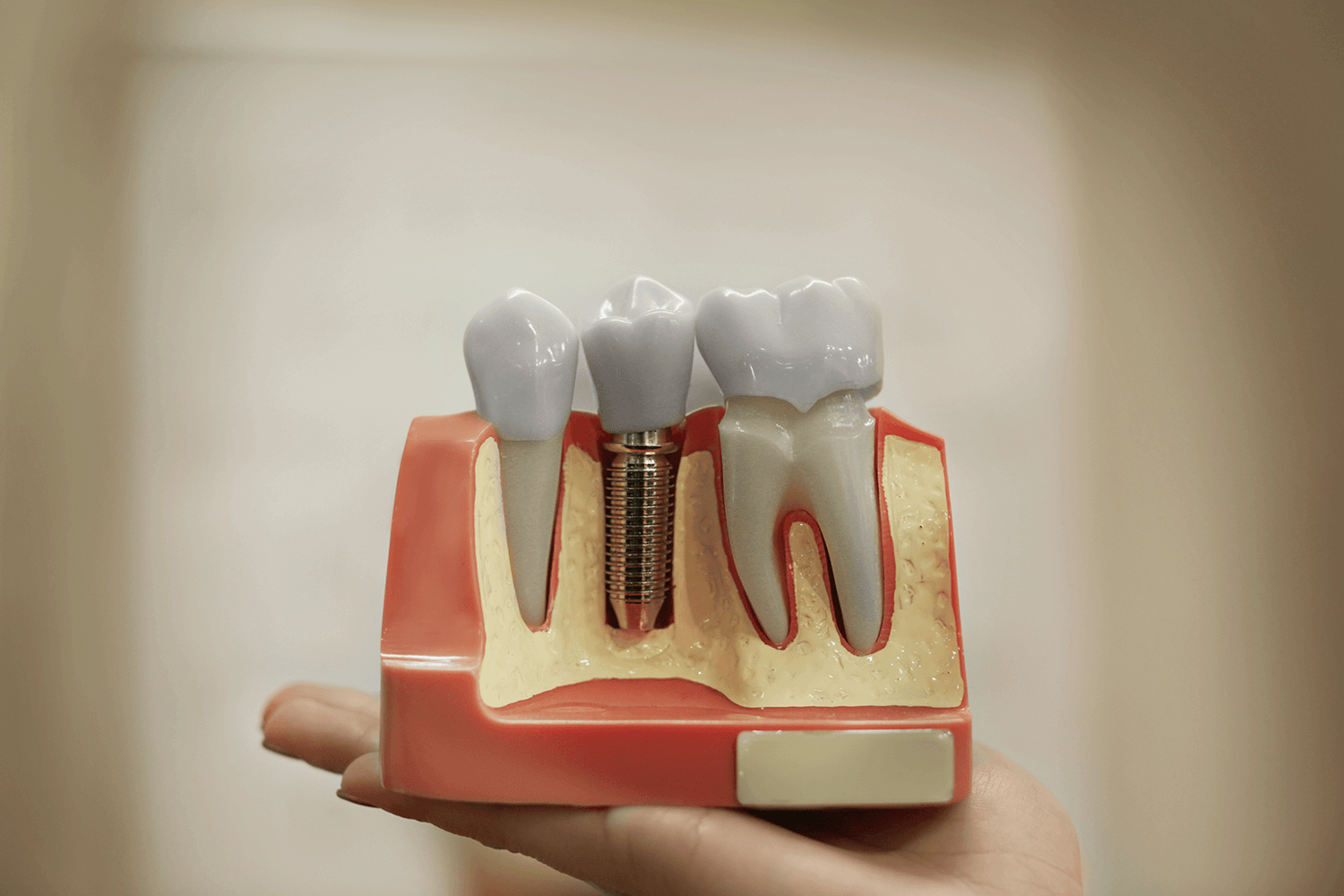
Losing a tooth changes more than the appearance of your smile. It can affect the way you chew, the stability of surrounding teeth and, over time, the condition of the jawbone. At Radiance Dental Hospital, dental implant treatment is approached as a complete oral rehabilitation rather than simply replacing what is missing.
Our hospital in Tirana brings diagnostics, implant surgery, digital planning and prosthetic dentistry together within one multidisciplinary treatment pathway. Each case is evaluated individually so that the final restoration is designed around the patient’s anatomy, bite and clinical needs.
A Dental Implant Should Start With a Diagnosis
Successful implant dentistry begins before surgery.
Before recommending dental implants, our team evaluates the condition of the teeth and gums, available bone, bite and the anatomical structures surrounding the planned implant position.
When clinically required, 3D CBCT imaging provides detailed information about bone height, width and anatomy. Digital intraoral scanning can also be used to create an accurate representation of the patient’s mouth.
This information allows our specialists to plan the treatment based on the actual clinical situation rather than following the same protocol for every patient.
What Is a Dental Implant?
A dental implant is a biocompatible artificial root placed into the jawbone to replace the root of a missing tooth. Once appropriate healing and integration have taken place, it can support a dental crown, bridge or a larger fixed restoration.
Depending on the number of missing teeth, implant dentistry can be used for:
- Replacement of a single missing tooth
- Multiple missing teeth
- Implant-supported bridges
- Full-arch dental rehabilitation
- All-on-4 treatment
- All-on-6 treatment
The appropriate solution depends on bone availability, oral health, functional requirements and several other clinical factors identified during diagnosis.
Digital Implant Planning at Radiance Dental Hospital
Precision matters because even small differences in implant position can influence the prosthetic result.
At Radiance Dental Hospital, digital technology helps our clinicians evaluate the relationship between the implant, bone and future restoration before proceeding with treatment.
Our workflow may combine CBCT 3D diagnostics, intraoral scanning and digital treatment planning to determine an appropriate implant position and prosthetic design.
Technology, however, does not replace clinical expertise. It provides specialists with better information for making treatment decisions.
One Missing Tooth or a Complete Smile Rehabilitation?
Not every implant patient needs the same treatment.
For someone missing a single tooth, an individual implant and crown may be sufficient. When several teeth are absent, an implant-supported bridge may provide a different solution.
Patients who have lost most or all of their teeth may instead be evaluated for a full-arch fixed rehabilitation, including All-on-4 or All-on-6 concepts where clinically appropriate.
This distinction is important. The number of implants alone does not determine whether a treatment is suitable. Bone condition, implant distribution, bite forces and the final prosthetic restoration must all be considered together.
What Happens When There Is Not Enough Bone?
Bone loss does not automatically mean that dental implant treatment is impossible.
The first step is determining where the bone deficiency is located and how extensive it is. Following a 3D evaluation, our surgical team can determine whether additional procedures or alternative implant strategies should be considered.
Depending on the individual case, this may include bone regeneration procedures, sinus-related treatments or other advanced surgical approaches.
The decision is always based on clinical and radiological assessment.
From Implant Surgery to the Final Teeth
Implant treatment is a process, not a single appointment.
After implant placement, the surrounding bone needs appropriate time to integrate with the implant. This biological process is known as osseointegration and plays an important role in long-term implant stability.
Temporary teeth may be possible in selected cases, while the definitive restoration is completed according to the healing process and treatment plan.
The final prosthetic phase focuses not only on appearance but also on bite, comfort, function and the relationship between the teeth and gums.
Natural-Looking Teeth Are Designed, Not Chosen From a Template
A successful implant restoration should belong to the patient’s face.
For this reason, the final teeth should not be designed according to a universal shape or an unnaturally white standard. Tooth proportions, smile line, facial characteristics, bite and surrounding tissues all influence the final design.
At Radiance Dental Hospital, implantology and prosthetic dentistry work together to create restorations intended to combine function with natural dental aesthetics.
Dental Implant Treatment for International Patients
Radiance Dental Hospital in Tirana welcomes patients travelling to Albania for dental treatment.
International implant cases require more than performing the surgical procedure. Diagnosis, treatment stages, healing periods and the definitive prosthetic phase need to be coordinated correctly before the patient travels.
Our team therefore evaluates each case individually and structures the treatment journey according to its clinical complexity and required stages.
Why Choose Radiance Dental Hospital for Dental Implants in Albania?
Modern implant dentistry depends on the interaction of several disciplines.
At Radiance Dental Hospital, implant surgery, oral surgery, prosthetic dentistry, digital diagnostics and treatment planning are integrated within a hospital environment in Tirana.
Our philosophy is straightforward: diagnose first, plan precisely and treat according to the individual patient.
If you are considering dental implants in Albania, contact Radiance Dental Hospital for an individual assessment and a treatment plan based on your dental and clinical needs.


