
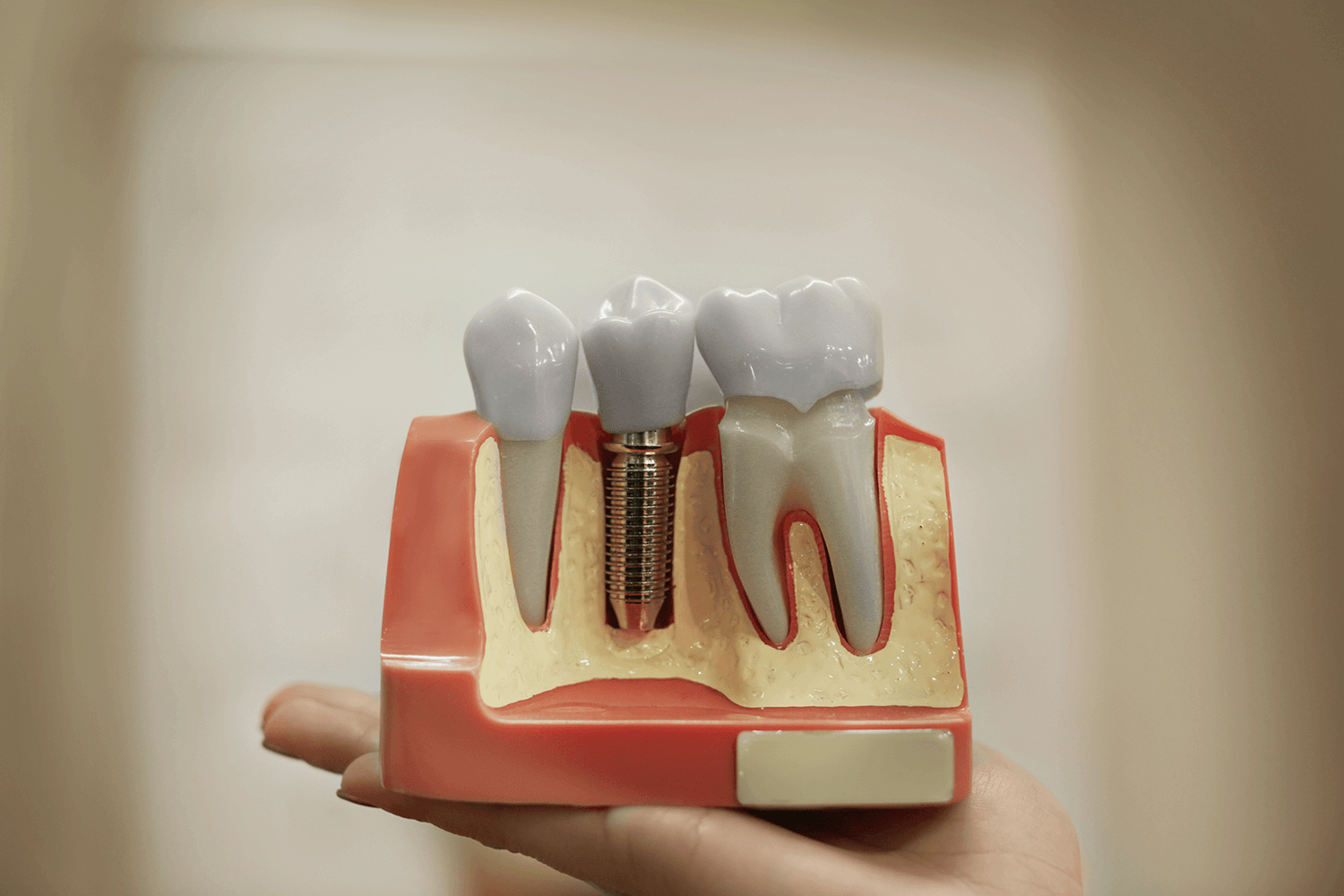
Choosing dental implants is not simply a decision about replacing missing teeth. It is a decision about your health, comfort and quality of life for the years ahead.
For patients considering dental implants in Albania, the most important questions are not only about travel or treatment time. Patients should understand who will manage their case, how the implants will be planned, which parts of the treatment will take place in the hospital and how their progress will be monitored after surgery.
Radiance Dental Hospital in Tirana provides implant treatment through a coordinated hospital-based approach. Diagnosis, oral surgery, prosthetic dentistry, digital scanning and dental laboratory services are brought together in the same facility.
This guide explains what patients should know before beginning their implant journey.
Start with the problem, not with the implant
Two patients may both ask for dental implants but require completely different treatments.
One person may need to replace a single missing tooth. Another may have advanced gum disease, significant bone loss or several damaged teeth. A patient wearing a removable denture may want a fixed alternative, while someone else may need reconstruction of both dental arches.
For this reason, treatment should not begin by choosing a technique such as All-on-4 or All-on-6. It should begin by identifying the clinical problem.
At Radiance Dental Hospital, the initial assessment considers:
- Which natural teeth can still be treated and preserved
- Which teeth have a poor or uncertain prognosis
- The condition of the gums
- The amount of available jawbone
- The patient’s bite and chewing pattern
- Previous dental treatments
- General health and current medication
- The patient’s functional and aesthetic expectations
Only after these factors have been examined can an appropriate implant solution be recommended.
What should an implant treatment plan explain?
A clear treatment plan should provide more than the number of implants and the name of the final material.
Before proceeding, the patient should understand:
- Which teeth will be preserved or removed
- Whether additional surgery may be necessary
- How many implants are being proposed and why
- Whether temporary fixed teeth are possible
- How long healing is expected to take
- What type of final restoration is planned
- How many visits to Tirana may be required
- What maintenance will be necessary afterwards
Radiance prepares each plan around the patient’s clinical findings. Plans based on photographs or messages alone remain preliminary until the patient has received an in-person examination.
From a single missing tooth to a complete new arch
Dental implants can support different types of restorations. The appropriate option depends on the number of missing teeth and the condition of the surrounding tissues.
Replacing one missing tooth
A single implant can support an individual crown. This may restore the missing tooth without preparing the adjacent healthy teeth for a conventional bridge.
The implant must be positioned with the final crown in mind. Space, gum level, bone volume and the position of neighbouring teeth all influence the result.
Restoring several missing teeth
When several teeth are absent, an implant-supported bridge may be considered. In many cases, several crowns can be supported by a smaller number of strategically placed implants.
The treatment must distribute chewing forces correctly. The number of implants is therefore determined by clinical and mechanical requirements, not only by the number of missing teeth.
Rebuilding a complete dental arch
Patients who have lost most or all of their teeth may be candidates for a complete fixed restoration supported by implants.
Possible configurations include All-on-4, All-on-6 or another arrangement selected for the individual anatomy. The terms describe the number of implants used to support the restoration, but they do not determine treatment quality by themselves.
The correct configuration depends on:
- Available bone
- Shape of the dental arch
- Implant stability
- Position of anatomical structures
- Opposing teeth
- Bite forces
- Design of the final prosthesis
- Possibility of cleaning the restoration properly
Radiance does not treat All-on-4 and All-on-6 as universal packages. The clinical team selects the configuration only after examining the patient’s mouth and three-dimensional imaging.
Why three-dimensional planning matters
A panoramic X-ray provides useful initial information, but it does not show the jawbone in three dimensions.
Radiance Dental Hospital uses CBCT Cone Beam imaging to examine bone height, width and anatomy. This allows the clinical team to evaluate areas that may not be visible clearly on conventional two-dimensional images.
A CBCT scan can help identify:
- The exact shape of the jawbone
- Areas with limited bone
- The position of nerves
- The size and location of the maxillary sinuses
- Previously placed implants
- Hidden infections or other findings
- Possible implant positions
- The need for additional surgical procedures
Digital intraoral scans can then record the shape of the teeth, gums and bite. Combining this information helps the team plan the implant according to the future restoration rather than treating surgery and prosthetics as separate procedures.
What if there is not enough bone?
Bone loss is common after teeth have been missing for a long time. It can also occur because of periodontal disease, infection, trauma or previous unsuccessful dental treatment.
Having limited bone does not always mean that implants are impossible. However, the solution depends on where the bone is missing and how severe the loss is.
Following a clinical examination and CBCT assessment, the team may consider:
- Bone grafting
- Guided bone regeneration
- Sinus lift surgery
- Alternative implant dimensions or positions
- A different full-arch implant configuration
- Zygomatic implants for selected cases of severe upper-jaw bone loss
Zygomatic implants are not a routine replacement for conventional implants. They are intended for specific complex situations and require advanced surgical planning and careful patient selection.
At Radiance Dental Hospital, complex cases can be reviewed by professionals from implant dentistry, oral and maxillofacial surgery, radiology and prosthetic dentistry within the same facility.
The truth about “teeth in one day”
The phrase “teeth in one day” is widely used in implant advertising, but it can create unrealistic expectations.
In suitable cases, a temporary fixed restoration may be attached shortly after implant surgery. This is known as immediate loading. The patient can have fixed provisional teeth during the healing period, but these are not the final teeth.
Immediate loading is considered only when the implants achieve sufficient initial stability and the clinical conditions allow it.
If stability is insufficient, loading the implants too early may introduce unnecessary risk. In that situation, allowing the implants to heal before attaching a fixed restoration can be the more responsible decision.
At Radiance, eligibility for immediate loading is confirmed clinically. It should not be guaranteed before the implants are placed.
What happens before travelling to Tirana?
International patients can send their available dental documents for an initial review.
Useful documents may include:
- A recent panoramic X-ray
- A recent CBCT scan
- Photographs of the teeth and smile
- Information about previous dental treatments
- A list of current medication
- Relevant medical history
Based on these documents, Radiance can provide an initial clinical orientation and explain which options may be evaluated.
However, remote documents cannot reveal every detail. Gum condition, tooth mobility, bite, implant stability and certain infections can only be assessed properly during a clinical visit.
What happens at Radiance Dental Hospital?
The first stage in Tirana is diagnostic rather than surgical.
The patient receives a clinical examination, and the submitted documents are reviewed alongside any new diagnostic images. The specialists then confirm which teeth can be preserved and whether the preliminary plan remains appropriate.
If treatment proceeds, the process may include:
Clinical preparation
Existing infections, damaged teeth or gum problems are assessed. Some patients may require extractions or other preliminary care.
Implant placement
Implants are inserted following the confirmed surgical and prosthetic plan. Treatment is normally performed using local anaesthesia. Additional anaesthetic support or conscious sedation may be considered when clinically appropriate.
Temporary rehabilitation
When immediate loading criteria are met, a temporary fixed restoration may be prepared. This restoration is designed for the healing phase and must be used according to the instructions provided by the clinical team.
Healing away from the hospital
Most biological healing takes place after the patient returns home. During this period, the patient must maintain careful oral hygiene, follow dietary guidance and report any unexpected symptoms.
Final rehabilitation
After osseointegration, the patient returns for the definitive prosthetic phase. Digital records are taken, the bite is checked and the final restoration is prepared and adjusted.
The exact schedule varies according to the number of implants, bone condition and complexity of the case.
One hospital, one coordinated clinical pathway
Full-mouth implant treatment involves more than the surgeon who places the implants.
The final outcome is influenced by diagnosis, implant positioning, laboratory work, bite design, hygiene access and long-term maintenance. Poor communication between these stages can affect comfort and function even when the implants themselves have integrated successfully.
Radiance Dental Hospital brings the main departments involved in treatment into the same building:
- Diagnostic imaging
- Implant dentistry
- Oral and maxillofacial surgery
- Prosthetic dentistry
- Digital intraoral scanning
- CAD/CAM production
- In-house dental laboratory
- Anaesthetic and clinical support
- International patient coordination
This structure allows the surgical and prosthetic teams to discuss the case directly and make adjustments during treatment when necessary.
How should patients compare implant providers?
Price is an understandable consideration, but comparing only the final number can be misleading. Two treatment plans may look similar while including different procedures, materials and levels of follow-up.
Before choosing where to receive dental implants, patients should ask:
- Is a CBCT examination included?
- Will a specialist assess which natural teeth can be preserved?
- Who is responsible for the surgical procedure?
- What implant system will be documented in the patient record?
- Who designs and produces the temporary and final teeth?
- Are the laboratory and clinical teams able to communicate directly?
- What happens if additional surgery becomes necessary?
- Is the proposed restoration temporary or definitive?
- Which future maintenance costs should be expected?
- Who should the patient contact after returning home?
A responsible provider should be willing to explain these points clearly.
Who may need additional assessment?
Implant treatment may require extra caution or medical coordination for patients with:
- Uncontrolled diabetes
- Active periodontal disease
- Heavy smoking habits
- Certain cardiovascular conditions
- Disorders affecting bone healing
- Previous radiotherapy involving the jaw
- Medication that influences bone metabolism
- Poor oral hygiene
- Severe teeth grinding
- Untreated oral infection
These conditions do not always exclude treatment, but they can influence healing and long-term implant stability. Patients should provide complete and accurate medical information before surgery.
Life after implant treatment
The completion of the final teeth is not the end of implant care.
Bacteria can collect around implants and beneath full-arch restorations. Without effective cleaning, inflammation may develop in the surrounding tissues.
Long-term care normally includes:
- Daily brushing
- Cleaning beneath bridges and full-arch restorations
- Use of appropriate interdental tools or oral irrigators
- Professional hygiene appointments
- Periodic evaluation of the gums and implants
- Bite checks
- Monitoring of the prosthetic components
- A night guard when recommended for grinding
Implants cannot develop decay, but the tissues around them can become diseased. Regular maintenance is therefore essential.
Questions patients often ask Radiance
Can damaged natural teeth always be replaced with implants?
No. If a natural tooth can be predictably treated and preserved, removing it may not be the best option. The clinical team should evaluate preservation before recommending extraction.
Are fixed teeth placed immediately after every implant procedure?
No. Immediate fixed temporary teeth are possible only when the implants, bone and bite meet specific clinical requirements.
Does choosing six implants always provide a better result than four?
No. Implant number alone does not determine treatment quality. Position, bone support, prosthetic design and maintenance access are equally important.
Can the final plan change after I arrive?
Yes. A remote evaluation is preliminary. The plan may change if the clinical examination or new diagnostic images reveal conditions that were not previously visible.
Are the temporary teeth the same as the final teeth?
No. Temporary teeth are designed for the healing period. The definitive restoration is produced later, after the implants have integrated and the tissues have stabilised.
How many trips will I need?
Many implant rehabilitation cases involve two main visits. Some complex treatments may require additional appointments. The schedule is confirmed after diagnosis.
Speak with the Radiance team
If you are researching dental implants in Albania, you can send your available X-rays and dental information to Radiance Dental Hospital for an initial review.
The purpose of this first step is to understand your situation and identify the examinations that may be required. A definitive diagnosis and treatment plan can only be confirmed after an in-person assessment in Tirana.
Radiance Dental Hospital
Rruga Ismail Qemali 27, Tirana, Albania
Telephone and WhatsApp: +355 68 66 88 888
Email: info@radiance.al
Website: www.radiance.al
This information is intended for general educational purposes. Dental implant treatment must always be recommended following an individual clinical and radiological assessment.


