
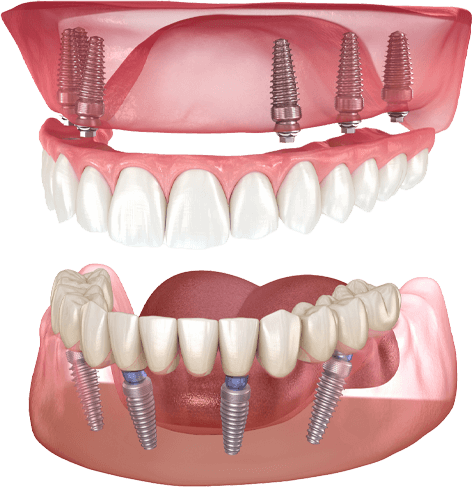
All-on-4 dental implants in Albania offer a fixed solution for people who have lost most or all of their teeth. At Radiance Dental Hospital, treatment begins with a detailed diagnosis and a clear understanding of the patient’s health, expectations and daily needs.
The All-on-4 concept uses four strategically positioned implants to support a complete fixed bridge. However, the number of implants is only one part of the treatment. Bone quality, implant stability, bite balance and prosthetic design all influence the final plan.
For this reason, our specialists evaluate every case individually. The aim is not simply to replace missing teeth. Instead, we work to restore comfortable chewing, facial harmony and confidence in everyday life.
When missing teeth begin to affect daily life
Living with missing or unstable teeth can change the way a person eats, speaks and smiles. Some patients avoid certain foods. Others feel uncomfortable in social situations because their removable denture moves while they talk or chew.
Over time, tooth loss can also affect the jawbone and the shape of the lower face. Therefore, replacing missing teeth is not only an aesthetic decision. It is also connected to oral function, comfort and long-term health.
All-on-4 dental implants in Albania may be considered when conventional dentistry can no longer preserve the remaining teeth or when a removable denture no longer provides adequate stability.
How four implants can support a complete set of teeth
The All-on-4 approach uses two implants in the front area and two implants in the back area of the jaw. The posterior implants may be placed at a planned angle to make better use of the available bone.
This configuration can create a stable foundation for a full-arch bridge. In selected cases, it may also reduce the need for extensive bone reconstruction. Nevertheless, only a 3D examination can determine whether this approach is suitable.
The treatment must consider both surgery and prosthetics from the beginning. Implant position affects the strength, appearance and maintenance of the final bridge. Therefore, the surgeon and prosthetic team plan the case together.
Who may benefit from All-on-4 treatment?
A clinical assessment may be appropriate if you:
- Have lost all the teeth in one or both arches
- Have several teeth that cannot be restored
- Wear a loose or uncomfortable removable denture
- Experience difficulty when chewing
- Want to explore a fixed alternative to removable teeth
- Have advanced periodontal disease
- Need a complete reconstruction of your smile
- Want one coordinated treatment plan
However, All-on-4 is not automatically the right option for every patient. General health, medication, smoking, uncontrolled diabetes, active infections and severe bone loss may affect the treatment plan.
In some situations, additional procedures may be necessary. In other cases, a different number of implants or another type of rehabilitation may provide a more appropriate result.
Planning All-on-4 dental implants in Albania
Successful implant treatment depends on what happens before surgery. At Radiance Dental Hospital, planning begins with a review of the patient’s dental condition and medical history.
The first assessment may include a panoramic X-ray, photographs or an existing CT scan. These records can help our team understand the general situation before the patient travels.
However, this initial review is not a final diagnosis. The definitive plan is confirmed after a clinical examination and diagnostic tests at the hospital.
3D Cone Beam assessment
Cone Beam computed tomography provides a three-dimensional view of the jaw. It allows the clinical team to examine:
- Bone height and width
- Bone density
- Nerve position
- Maxillary sinus anatomy
- Existing infections
- Previous dental work
- Possible implant positions
This information helps the surgeon identify anatomical limitations and assess whether four implants can provide the required support.
Digital implant planning
After the diagnostic stage, the clinical team plans the position, angle and depth of each implant.
Digital planning also connects the surgical phase with the future bridge. As a result, the implants are positioned with the intended prosthetic design in mind.
The plan may be adjusted if the scans reveal bone loss, infection or another condition that was not visible in photographs or a panoramic X-ray.
Smile and bite analysis
A full-arch restoration must work correctly when the patient speaks and chews. Therefore, the team studies the bite, available space, lip support and facial proportions.
Tooth length, shape and position also need careful consideration. A very white or excessively uniform smile may look artificial. For this reason, the prosthetic design should complement the individual patient rather than follow the same template for everyone.
What your treatment journey may include
The process for All-on-4 dental implants in Albania is usually divided into two main clinical visits. However, the exact schedule depends on the complexity of the case.
First visit: diagnosis and surgery
The first visit begins with clinical examinations and 3D imaging. The team then confirms the diagnosis, treatment sequence and expected healing period.
If the remaining teeth cannot be preserved, they may be removed during the surgical stage. The implants are then placed according to the approved plan.
When necessary, the surgeon may also perform bone regeneration or another supporting procedure. These decisions are based on the patient’s anatomy and cannot be confirmed from photographs alone.
Temporary fixed bridge
If the implants achieve sufficient primary stability, a temporary fixed bridge may be provided within approximately 24 to 72 hours.
This bridge allows the patient to leave the hospital with fixed temporary teeth. Nevertheless, it is not the final restoration. The patient must follow a softer diet and avoid placing excessive pressure on the implants during healing.
Immediate loading is not suitable in every case. The clinical team makes this decision after measuring implant stability and assessing the surgical conditions.
Healing period
During the following months, the implants integrate with the jawbone. This biological process is known as osseointegration.
Healing commonly requires between three and six months. However, individual recovery times may differ.
Good oral hygiene, appropriate nutrition and respect for postoperative instructions are important during this period. Smoking and uncontrolled medical conditions may negatively affect healing.
Second visit: the definitive bridge
Once the implants have integrated, the prosthetic phase can be completed.
Digital scans and bite records are used to design the definitive bridge. The patient may also complete aesthetic and functional trials before the final restoration is delivered.
The team checks:
- Tooth shape and colour
- Facial and lip support
- Speech and pronunciation
- Bite contact
- Chewing balance
- Bridge accessibility for cleaning
- Patient comfort
Only after these details have been assessed is the final bridge completed and fitted.
The difference between temporary and definitive teeth
The temporary bridge protects the surgical area and provides teeth during healing. It is designed for limited use while the implants integrate.
The definitive bridge is produced after healing because the gums and surrounding tissues may change during the first months.
Waiting for this stage allows the prosthetic team to make more accurate decisions about the bite, tooth position and final appearance.
Therefore, temporary and definitive restorations should not be considered the same product. Each has a specific role in the treatment process.
All-on-4 or All-on-6?
Patients often ask whether four or six implants are better. In reality, there is no single answer for every case.
All-on-6 uses two additional implants. This may provide a different distribution of chewing forces when the anatomy allows it. However, six implants are not always necessary or possible.
The choice depends on:
- Available bone
- Jaw anatomy
- Bite strength
- Bruxism
- General health
- Type of final bridge
- Position of anatomical structures
- Long-term prosthetic planning
Radiance Dental Hospital evaluates these factors before recommending All-on-4, All-on-6 or another treatment option.
Why choose Radiance Dental Hospital?
Choosing where to receive full-arch implant treatment requires more than comparing destinations. Patients should consider the diagnostic process, clinical team, technology, safety protocols and follow-up plan.
Radiance Dental Hospital brings the main stages of treatment together in one modern dental facility in Tirana.
Coordinated specialist care
Complex implant rehabilitation involves several areas of dentistry. Depending on the case, the treatment team may include oral and maxillofacial surgeons, implantologists, prosthetic dentists, radiology professionals, anaesthesia specialists and dental technicians.
Each professional contributes to a specific part of the treatment. At the same time, the team works from one coordinated clinical plan.
Diagnosis, surgery and prosthetics in one building
Patients can complete their main diagnostic examinations, surgical treatment and prosthetic appointments within the same hospital.
This structure helps reduce unnecessary transfers between different centres. It also supports direct communication between the professionals responsible for each stage.
Digital technology
Radiance uses 3D imaging, digital scanning and prosthetic planning technologies to collect accurate clinical information.
Digital tools do not replace medical experience. Instead, they provide information that helps the team make more informed decisions.
A plan created for the individual patient
Radiance does not assume that All-on-4 is the correct treatment for everyone.
If the examination shows that another solution would be more suitable, the team explains the alternatives. These may include All-on-6, individual implants, bone regeneration or a different prosthetic design.
This individual approach is essential because two patients with similar missing teeth may have very different anatomical conditions.
Support for international patients
Our coordination team helps international patients understand the clinical stages, expected travel schedule and required documentation.
Patients receive clear instructions before their arrival and after surgery. Assistance is also available in different languages to make communication easier throughout the process.
Safety and sterilisation protocols
Implant surgery requires careful infection control. Instruments, clinical spaces and medical devices are managed according to defined cleaning, disinfection and sterilisation procedures.
In addition, the patient’s medical condition is reviewed before surgery. This helps the team identify relevant risks and plan the procedure responsibly.
Living with a fixed full-arch bridge
A fixed bridge does not move like a removable denture. However, it still requires daily care.
Food and plaque can collect beneath the bridge and around the implants. Therefore, patients need to use the cleaning methods recommended by the dental team.
Daily care may include specialised brushes, interdental tools or a water flosser. Professional hygiene appointments and regular implant examinations are also important.
Furthermore, patients who grind their teeth may require additional protection. The team may recommend a night guard after evaluating the bite.
How long can the result last?
No responsible clinic can promise that dental implants will last forever.
Long-term stability depends on many factors. These include implant positioning, bone health, prosthetic design, oral hygiene, smoking, medical conditions and attendance at follow-up appointments.
The patient also has an active role. Consistent maintenance helps protect both the implants and the surrounding tissues.
For this reason, Radiance provides guidance on home care and explains the importance of ongoing professional monitoring.
Why patients travel to Tirana for treatment
Tirana is accessible from many European cities. However, travel convenience should not be the only reason to choose a dental provider.
Patients should look for a structured treatment pathway, appropriate diagnostics, qualified specialists and clear communication.
By choosing All-on-4 dental implants in Albania at Radiance Dental Hospital, patients can complete the main stages of their rehabilitation in one coordinated facility.
The treatment schedule can be organised around the required healing periods. Nevertheless, clinical safety remains more important than completing the process as quickly as possible.
Request an individual assessment
Every full-arch case begins with a different dental condition. Therefore, an individual clinical assessment is necessary before confirming any treatment.
You may send our team a recent panoramic X-ray or CT scan together with photographs and a brief description of your dental concerns.
These records allow us to provide an initial evaluation. However, the final diagnosis and treatment plan are confirmed only after an in-person examination.
All-on-4 dental implants in Albania at Radiance Dental Hospital combine 3D diagnostics, digital planning, specialist surgery and personalised prosthetic care in one facility.
Contact our patient coordination team to learn which full-arch solution may be appropriate for you.


