
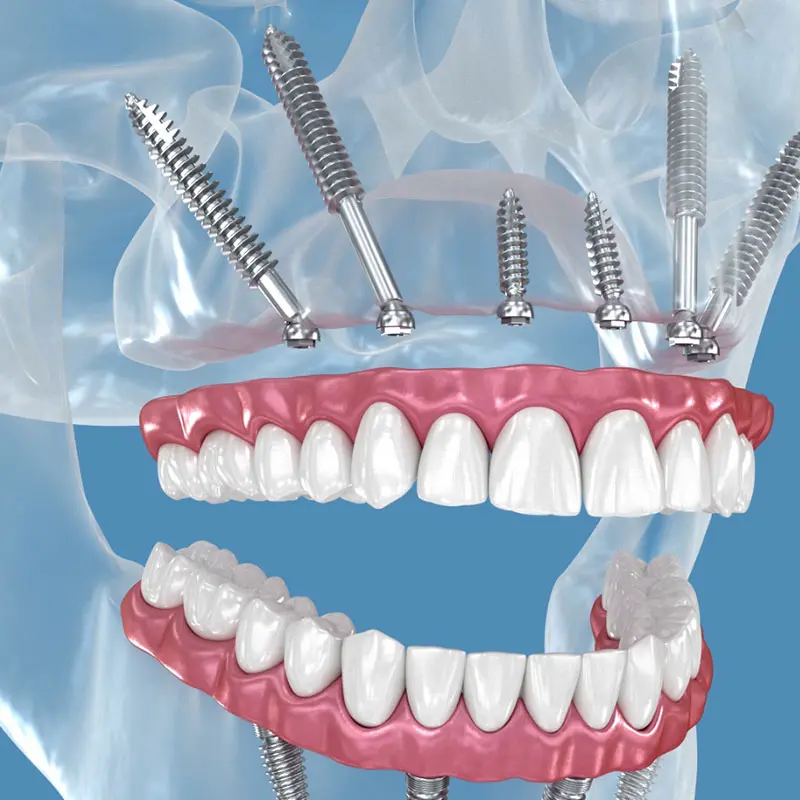
Zygomatic implants: an advanced solution for patients with severe bone loss
Zygomatic implants offer a reliable path back to a fixed smile for patients who have been told they don’t have enough bone for traditional dental implants. Unlike conventional implants, which anchor into the maxillary bone, zygomatic implants are anchored into the zygomatic bone — the dense, highly resistant bone structure of the cheekbone — making them one of the most advanced solutions available today for severe bone atrophy.
For years, patients with significant bone loss in the upper jaw had only one option: bone grafting or sinus lift procedures before any implant could be placed. These procedures extend treatment time considerably and don’t always guarantee the expected outcome. At Radiance Dental Hospital, zygomatic implants have changed that, offering a fixed rehabilitation even in the most complex cases, often without the need for prior bone grafting.
What exactly are zygomatic implants?
Zygomatic implants are longer than traditional implants and are specifically engineered to anchor into the zygomatic bone rather than the maxilla. This design achieves excellent primary stability even when very little bone volume is available.
This advanced surgical technique is often combined with immediate loading, meaning that in many cases patients can leave the clinic with a provisional fixed prosthesis on the same day as surgery.
Benefits of zygomatic implants
- No bone grafting required in most cases, significantly shortening the overall treatment timeline
- Immediate function thanks to same-day fixed provisional prosthetics
- High stability due to anchorage in dense cortical bone
- Predictable outcomes, even for patients who have already experienced implant failure
- Fewer surgical stages compared to graft-and-wait protocols
- Renewed quality of life, restoring chewing function and facial support quickly
Who can benefit from this technique?
Zygomatic implants are particularly indicated for patients who present with:
- Severe bone loss or advanced atrophy of the upper jaw
- Total or near-total edentulism
- Failure of previous implant treatments
- Contraindication to, or refusal of, bone grafting procedures
- The need for a fixed solution within a shorter treatment timeline
Every case is unique. Each indication is confirmed through an individualized clinical assessment and three-dimensional radiological imaging.
Step-by-step treatment process
- Initial consultation and 3D diagnostics — CBCT scans assess bone density and anatomy
- Digital treatment planning — computer-guided surgical planning maps the exact implant position
- Surgical placement — implants are anchored into the zygomatic bone under anesthesia and, when appropriate, sedation
- Immediate provisional prosthesis — a fixed temporary set of teeth is often fitted the same day
- Healing phase — soft tissue and bone integration are monitored over the following months
- Final fixed prosthesis — a custom, permanent restoration is delivered once healing is confirmed
Digital diagnostics and precision surgical planning
Every zygomatic implant treatment is planned using state-of-the-art diagnostic imaging technology, including Cone Beam CT (CBCT) scans, allowing our specialists to accurately assess bone density and availability.
Based on these images, our team carries out computer-guided implant planning, which significantly increases surgical precision and reduces the risks associated with the procedure.
A multidisciplinary team for complex cases
Zygomatic implant treatment requires advanced surgical expertise. For this reason, every case is evaluated and treated by a multidisciplinary team of oral surgeons, implantologists, and prosthodontists specialized in complex oral rehabilitation.
This collaborative approach allows our specialists to design a fully personalized treatment plan, tailored to each patient’s anatomy and specific clinical needs.
Recovery after surgery
Recovery from zygomatic implant surgery is generally well tolerated. Mild swelling or bruising in the first few days is normal and typically managed with prescribed medication. Most patients resume a soft diet within the first week and gradually return to normal eating habits as healing progresses. Full osseointegration continues over the following months, while the fixed provisional prosthesis allows patients to eat, speak, and smile with confidence from the very beginning.
How long do zygomatic implants last?
With proper maintenance and regular check-ups, zygomatic implants are designed to provide a long-term, durable solution, often lasting for many years or even a lifetime. Long-term success depends on good oral hygiene, avoiding smoking, and attending scheduled follow-up visits.
Why international patients choose Albania
Albania has become an increasingly popular destination for patients seeking advanced implant treatments abroad. Tirana offers easy flight connections from most European capitals, modern dental facilities, and shorter waiting times than many home countries. Combined with English-speaking support and a fully coordinated treatment journey, this makes complex procedures like zygomatic implants far more accessible for international patients.
Frequently asked questions about zygomatic implants
Is the procedure painful?
As with any surgery, the procedure is performed under anesthesia and, in many cases, with additional sedation to ensure maximum patient comfort throughout.
What is the recovery time?
Most patients return to normal daily activities within a week, while full bone integration continues over the following months.
Are zygomatic implants an alternative to bone grafts?
In most cases of severe bone atrophy, yes. Because zygomatic implants anchor into a denser, more stable bone structure, they often eliminate the need for grafting altogether.
Can smokers receive zygomatic implants?
Smoking can affect healing and long-term outcomes, so each smoker’s case is carefully assessed individually before treatment is recommended.
How many days should I stay in Albania?
Treatment length varies by case, but many international patients plan an initial stay of several days for surgery and follow-up, with a return visit later for the final prosthesis.
What if I previously lost dental implants?
Zygomatic implants are often specifically indicated for patients who have experienced previous implant failure, as they rely on a different, more stable bone structure.
Is every patient a candidate?
Not every patient is a suitable candidate. Eligibility depends on an individual clinical and radiological assessment carried out by the specialized team. According to guidance from the American College of Prosthodontists, patient selection for advanced implant techniques should always be based on a comprehensive clinical evaluation.
Why choose Radiance Dental Hospital?
- A modern dental hospital located in Tirana
- A multidisciplinary team of specialists dedicated to high-complexity cases
- Precision 3D digital diagnostics
- An in-house dental laboratory
- Comprehensive care for international patients
- English-speaking support throughout the entire process
- Fully personalized treatment planning
Designed for international patients
Every year, Radiance Dental Hospital welcomes patients from the United Kingdom and across Europe seeking reliable solutions for complex cases of bone loss. Our team coordinates every stage of treatment, from the initial consultation through to follow-up care, ensuring close, transparent, and continuous support throughout the entire journey.
Book your specialist consultation
If you’ve been told you don’t have enough bone for dental implants, a specialist evaluation can help determine whether zygomatic implants are the right solution for your case.
Contact Radiance Dental Hospital and request a personalized consultation with our team of specialists.


